

Let’s be honest—the conference room and the poker table seem worlds apart. One’s about quarterly reports and synergy; the other’s about bluffs and bad beats. But here’s the deal: strip away the green felt and the smoky air, and you’ll find a stunning overlap in strategy. The best poker players aren’t just gamblers; they’re masterful decision-makers under pressure. And those skills? They translate, almost eerily well, to the art of business negotiation and strategic choice.
This isn’t about treating partners like opponents. It’s about borrowing a winning mindset. A mindset built on probabilistic thinking, reading subtle cues, and managing precious resources—time, money, and information. Let’s dive in.
The Core Parallels: Chips, Cards, and Conviction
At its heart, poker is a game of incomplete information. You never know the other players’ exact cards. Sound familiar? In business, you rarely have the full picture—a competitor’s true bottom line, a client’s internal politics, the future market shift. You act based on the best information you can gather. That’s the first, and maybe biggest, parallel.
Your stack of chips is your business capital—financial, social, or reputational. Betting is an allocation of that capital. Do you go all-in on a new product launch? Or just call with a modest R&D budget? Every decision carries risk and potential reward. And just like in poker, you have to protect your stack to stay in the game.
Key Concepts to Fold Into Your Business Playbook
1. Pot Odds and Expected Value (EV)
This is the big one. In poker, pot odds are the ratio of the current size of the pot to the cost of a call you’re facing. You compare this to the odds of completing your hand. It’s a cold, mathematical way to decide: is this bet worth it?
In business negotiation, you’re constantly calculating expected value. If you concede on price to close a deal, what’s the long-term value of that relationship? If you walk away from a merger, what opportunities are you preserving capital for? It forces you to move beyond “winning” the single point and look at the total value of the outcome. Sometimes, folding a weak hand—or walking from a bad deal—is the most profitable move you can make.
2. Position is Power
In poker, acting last—having position—is a massive advantage. You get to see what everyone else does before you make your move. More information, more control.
In a negotiation, you can manufacture position. Who speaks first? Who sets the agenda? Often, letting the other side state their terms first gives you invaluable information. You learn about their priorities, their limits. It’s like seeing a bet before you decide to raise or fold. Don’t rush to show your cards.
3. The Art of the Controlled Bluff (Strategic Misrepresentation)
Okay, let’s not call it bluffing in business. That sounds unethical. Think of it as strategic misdirection. You might signal you have other offers to create urgency, or express less enthusiasm than you feel to avoid seeming desperate. It’s about controlling the narrative and the perceived value of what’s on the table.
The key, as in poker, is consistency and believability. A good bluff is backed by a coherent story. If your “tell” is that you always get nervous when budgets are discussed, you’ve lost the edge. You know?
Reading the Table: Beyond the Spreadsheet
Poker players don’t just stare at their cards. They watch. How does an opponent handle their chips when they’re strong? Do they glance away when bluffing? This “tells” are the unspoken data.
Business has tells, too. The pace of an email response. The specific language in a contract clause. A client’s repeated return to a specific concern—that’s their “tell” about what they truly value. The best negotiators are hyper-observant, synthesizing the quantitative and the qualitative to build a fuller picture.
| Poker Concept | Business Application | The Mental Shift |
| Bankroll Management | Risk Capital Allocation | Never risk what you can’t afford to lose on a single deal. Preserve optionality. |
| Tilt Control | Emotional Regulation | After a loss (a failed deal), don’t make impulsive decisions to “win it back.” |
| Table Selection | Market & Partner Choice | Choose negotiations where you have a real edge. Avoid games you can’t win. |
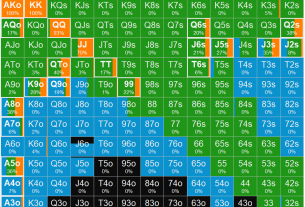
| Hand Ranges | Scenario Planning | Don’t assume one motive. Assign a range of possible positions to your counterpart and plan for each. |
The Psychology of Bet Sizing and Pressure
In poker, the size of your bet sends a message. A tiny bet can look weak, inviting a raise. A huge, over-sized bet can scream strength—or desperation. It’s a tool.
Your offers and concessions in a negotiation work the same way. A first offer that’s too aggressive can kill trust. A concession that’s too large, too early, devalues your entire position. Small, incremental movements often feel more collaborative and measured. They keep the other side engaged without giving away the farm. You’re not just negotiating terms; you’re negotiating perception and momentum.
Knowing When to Walk Away: The Fold
Honestly, this might be the hardest skill to learn in both domains. The sunk cost fallacy is real. You’ve invested time, money, ego… folding feels like failure. But in poker, the pros fold constantly. They know that preserving chips for a better, clearer opportunity is the path to long-term profit.
In business, having a clear Best Alternative To a Negotiated Agreement (BATNA) is your version of a folding strategy. It’s your walk-away power. If you know what you’ll do if this deal falls apart, you negotiate from strength. You can make rational decisions, not emotional ones. You stop chasing lost causes.
So, what’s the takeaway? It’s not about becoming a card shark. It’s about embracing a more probabilistic, observant, and disciplined way of thinking. Business, like poker, is a long game played over countless hands and deals. The goal isn’t to win every single one—it’s to make positive expected value decisions consistently, manage your resources ruthlessly, and read the room better than anyone else.
Maybe the next time you’re heading into a high-stakes meeting, ask yourself: what would a pro do? Would they push all their chips in now, or wait for a better spot? The answer might just change how you play your hand.