
Let’s be honest — you’re not trying to be the next Phil Ivey. You’ve got a day job, maybe a family, and a stack of other responsibilities. Poker is your escape, your side hustle, or just a way to keep the competitive juices flowing. But here’s the deal: if you don’t manage your bankroll like a business, the game will eat you alive. Not because you’re bad, but because variance is a brutal, beautiful beast.
I’ve seen it happen a thousand times. A part-time player grinds up $500, feels invincible, jumps into a $100 buy-in tournament, and busts in an hour. Then they’re chasing losses with tilt, and suddenly that “fun hobby” becomes a financial drain. Sound familiar? Yeah, I thought so. Let’s fix that.
Why Part-Time Players Need a Different Rulebook
Full-time pros can afford to take shots. They have the volume, the time, and the emotional detachment to ride out downswings. You? You’ve got maybe 10 hours a week, if you’re lucky. That means every session matters more. You can’t just “grind it out” over 50,000 hands a month. Your sample size is tiny, so your bankroll needs to be bigger relative to your buy-ins.
Think of it like this: a pro is driving a semi-truck with 18 wheels — they can handle potholes. You’re on a motorcycle. One bad pothole and you’re in the ditch. So, your bankroll strategy has to be more conservative, more defensive, and honestly, a bit more boring. Boring is good. Boring keeps you in the game.
The 100 Buy-In Rule (Yes, Really)
For cash games, the old rule was 20-30 buy-ins. For part-timers, I’d push that to 50 minimum. But for tournaments? You need 100 buy-ins. I know, I know — that sounds insane. But think about it. Tournament variance is wild. You can go 20 straight tournaments without cashing, even if you’re a winning player. That’s just math.
If you’re playing $10 tournaments, you need a $1,000 bankroll. Not $300. Not $500. A thousand. Why? Because when you hit that inevitable 15-tournament cold streak, you won’t be forced to drop down in stakes or quit entirely. You’ll just shrug and keep playing your A-game. And that’s the secret — staying in the game long enough for variance to even out.
Your Bankroll Is Not Your “Fun Money”
Here’s a common mistake: players mix their poker bankroll with their personal spending money. That’s a recipe for disaster. You need a separate account, or at least a separate digital wallet. Call it your “Poker LLC.” This money is untouchable for anything except poker. No groceries, no gas, no “just this one nice dinner.”
I remember a guy in my local home game — smart, analytical, but he’d dip into his bankroll for date nights. Then he’d be under-rolled for the next game, play scared, and make terrible calls. It took him six months to figure out why he kept losing. It wasn’t the cards. It was the leakage.
Set a Monthly “Poker Budget”
Since you have a regular income, you have a luxury that pros don’t: you can replenish your bankroll from your salary. But that’s a double-edged sword. It can mask bad habits. So, set a fixed monthly contribution — say, $100 or $200 — that goes straight into your poker account. That’s your fuel. If you lose it, you wait until next month. No exceptions.
This does two things. First, it caps your downside. You can never lose more than your monthly allowance. Second, it forces you to play within your means. If your bankroll drops below 100 buy-ins for your stakes, you move down. Period. That’s not a suggestion; that’s survival.
Tracking Your Results (It’s Not Optional)
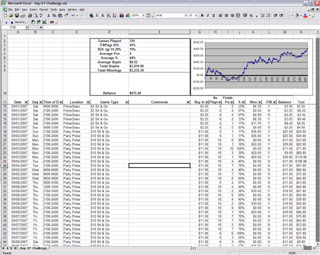
You can’t manage what you don’t measure. If you’re not tracking your sessions, you’re flying blind. Use a simple spreadsheet or an app like Poker Bankroll Tracker. Record the date, game type, buy-in, cash-out, and a few notes on your mental state. Were you tired? Distracted? Tilting after a bad beat?
After 20 sessions, look at the data. You might be surprised. Maybe you’re winning at cash games but bleeding money in turbos. Maybe you play great on Saturdays but terrible on Wednesday nights after work. The numbers don’t lie. They’ll tell you exactly what to fix.
The 10-Session Checkpoint
Here’s a simple rule I use: every 10 sessions, do a mini-audit. If your bankroll is up, great — maybe you can add a slightly higher buy-in game to your rotation. If it’s down, you don’t panic. You just check if you’re playing within the 100 buy-in rule. If yes, keep going. If no, drop down. That’s it. That’s the whole system.
It’s not glamorous, but it works. And honestly, the discipline you build here spills over into your real life. You start making better decisions everywhere — not just at the felt.
Dealing with Downswings Without Losing Your Mind
Downswings are inevitable. Even the best players in the world go through months of losing. The difference is they have the bankroll and the mental framework to survive it. You need both too.
Here’s the thing about downswings — they’re not just about money. They mess with your head. You start doubting your decisions. You start playing scared or, worse, overly aggressive. That’s when you need a system to rely on, not your gut.
- Stop playing immediately if you feel tilt creeping in. Walk away. Go for a run. Watch a movie. The cards will still be there tomorrow.
- Review your hand histories — not to find mistakes, but to confirm you’re making good decisions. If you’re playing well and losing, that’s variance. It sucks, but it’s temporary.
- Drop down one stake level for a week. Just to rebuild confidence and bankroll. It feels like a demotion, but it’s actually a strategic retreat.
I’ve got a buddy who calls this “going to the minors.” He plays micro-stakes for a week after a big loss. He says it reminds him why he loves the game — not just the money. And you know what? He’s never busted his bankroll in 10 years.
Game Selection Is a Bankroll Tool
You wouldn’t walk into a lion’s den with a steak strapped to your chest, right? So why do you sit down at a table full of sharks when you’re under-rolled? Game selection is the most underrated bankroll management tool. It’s not just about stakes — it’s about the player pool.
For part-timers, I recommend sticking to softer games. That might mean playing on weekends when recreational players are out, or avoiding the high-stakes online tables where the pros lurk. Look for tables with high average pot sizes and low pre-flop raise percentages — that usually means passive, loose players. That’s your bread and butter.
| Game Type | Bankroll Needed (Buy-ins) | Best Time to Play |
|---|---|---|
| Cash Games | 50-100 | Evenings & weekends |
| Tournaments | 100-150 | Weekend afternoons |
| SnG (Single Table) | 75-100 | Any time, but avoid late night |
That table is a starting point, not gospel. The key takeaway? Don’t be the fish at the table. Be the one who picks the right pond.
Reinvesting vs. Cashing Out
When you hit a good streak — and you will — the temptation is to cash out everything. Resist that urge. Here’s a healthy split: cash out 50% of your profits, and keep the other 50% in your bankroll to move up in stakes or just as a cushion.
This gives you the best of both worlds. You feel the reward of your hard work (that’s important for motivation), but you also let your bankroll grow naturally. Over time, this compounding effect is what separates consistent winners from one-hit wonders.
Think of it like a garden. You don’t eat all the seeds — you plant some for next season. Same with poker. If you harvest everything, you’ll have nothing left to grow.
The Emotional Bankroll (Yes, It’s Real)
We talk about money, but what about your mental energy? Part-time players often neglect this. You come home from work, tired, maybe a little stressed. You sit down to play, and you’re not in the right headspace. That’s not a bankroll problem — that’s an emotional bankroll problem.
Set a rule: no poker when you’re exhausted, angry, or distracted. Honestly, that one rule will save you more money than any bankroll formula. I’d rather play 5 hours a week at 100% focus than 10 hours at 50%. Quality over quantity, always.
And don’t forget to take breaks. A week off every couple of months is not a weakness. It’s maintenance. You’ll come back sharper, hungrier, and more objective.
Wrapping This Up (Without the Fluff)
Sustainable poker bankroll management isn’t about being a genius. It’s about being consistent, disciplined, and a little bit boring. It’s about protecting your downside so you can enjoy the upside. You’re playing this game for the long haul, not for one lucky night.
So, take a hard look at your current bankroll. Are you following the 100 buy-in rule? Are you tracking your sessions? Are you playing when you shouldn’t be? If you answered “no” to any of those, that’s your starting point. No shame in it — we all start somewhere.