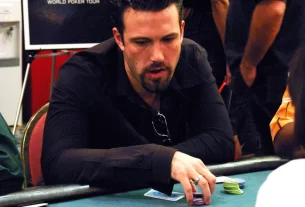

You know that feeling when you’re sitting at a poker table—the clink of chips, the subtle twitch of an opponent’s eyebrow, the faint hum of the casino floor. That’s immersion. That’s the magic. And for years, online poker has been a flat, pixelated shadow of that experience. But now? Virtual reality is changing the game. Honestly, it’s not just about playing cards anymore; it’s about being at the table.
What Makes VR Poker Different?
Let’s be real—traditional online poker is convenient. You can play in your underwear, eat a sandwich, and fold a bad hand without anyone knowing. But it lacks soul. VR poker rooms, on the other hand, drop you into a digital space that feels… alive. You can look around, lean in, and even read body language—or at least, a simulated version of it.
Here’s the deal: immersion isn’t just about graphics. It’s about presence. When you put on a VR headset, your brain starts to believe you’re somewhere else. That’s the real power. Suddenly, the guy across the table isn’t just a username—he’s a 3D avatar who might be bluffing or sweating. You can feel the tension.
The Social Layer: More Than Just Cards
One of the biggest pain points in online poker is the loneliness. You’re staring at a screen, clicking buttons. No banter, no shared sighs. VR changes that. In a virtual room, you can chat naturally—your voice comes through spatial audio, so it sounds like it’s coming from the person next to you. You can nod, shake your head, even throw your hands up in frustration. It’s weirdly human.
I’ve played a few sessions myself, and I’ll admit—it’s a little disorienting at first. You forget you’re in your living room. You catch yourself trying to push your chips forward with your actual hand. That’s immersion, baby.
Key Features That Boost Player Immersion
Not all VR poker rooms are created equal. Some are bare-bones; others are practically casinos in your head. Here are the features that really crank up the immersion dial:
- Realistic avatars with eye tracking — Some platforms let you see where your opponents are looking. That’s a game-changer for reading bluffs.
- Customizable tables and environments — Want a smoky backroom vibe? Or a penthouse with a view? You got it.
- Hand gestures and physics — You can actually pick up your chips, stack them, and slide them into the pot. It sounds trivial, but it’s not.
- Ambient sound design — The shuffle of cards, the murmur of other tables, the occasional clink of a glass. It all adds up.
- Cross-platform play — Some rooms let VR players mix with desktop users, which keeps the player pool healthy.
But here’s the thing—immersion isn’t just about what you see or hear. It’s about what you feel. And that’s where the tech gets really interesting.
The Psychology of Virtual Presence
There’s a concept in VR called “presence”—the moment your brain stops treating the experience as a simulation. You flinch when a virtual object flies at your face. You feel a little nervous when a big bet is made. In poker, this is gold.
Think about it: in regular online poker, you can’t see if your opponent is shaking. You can’t hear the hesitation in their voice. But in VR, you get micro-expressions (or at least, simplified versions). You can lean in to study someone’s avatar. You can catch a tell—or at least, you think you can. And that uncertainty? That’s what makes poker thrilling.
Sure, some purists argue that VR poker is still a gimmick. They say it’s not the same as real life. And they’re right—it’s not. But it’s closer than anything we’ve had before. It’s like the difference between watching a concert on YouTube and being in the front row. Both are music, but one hits different.
Pain Points VR Poker Solves (And Creates)
Let’s not pretend VR is perfect. It has its own set of headaches. Here’s a quick breakdown:
| Pain Point | How VR Helps | New Challenge |
|---|---|---|
| Lack of social interaction | Spatial voice chat, gestures | Awkward silence when someone’s mic is bad |
| No tells or body language | Animated avatars, eye tracking | Avatars can still look robotic |
| Boredom between hands | Interactive environments, mini-games | Motion sickness for some players |
| Screen fatigue | Immersive 3D space | Headset weight after hours |
So yeah, it’s a trade-off. But for the players who crave that in-person feel without leaving home? It’s a no-brainer.
Current Trends in VR Poker Rooms
The landscape is shifting fast. A few years ago, VR poker was a niche experiment. Now? You’ve got platforms like PokerStars VR, Vegas Infinite, and even indie rooms popping up. Some are free-to-play, others use crypto or real money. The trend is toward social immersion—making the experience feel like a night out, not just a game.
Another trend? Haptic feedback. Some newer headsets and gloves let you feel the vibration of chips or the tap on your shoulder. It’s early days, but imagine being able to feel the weight of your stack. That’s next-level immersion.
And let’s not forget AI-driven dealers. Some rooms now have virtual dealers that react to your actions—they smile when you win, frown when you lose. It’s a little uncanny valley, sure, but it adds a layer of personality that flat screens just can’t match.
How to Get the Most Out of VR Poker
If you’re thinking about diving in, here’s some advice from someone who’s been there:
- Invest in a decent headset — The Quest 3 or a PC-based headset like the Valve Index makes a huge difference. Cheap headsets ruin immersion fast.
- Set up your space — You’ll be moving your hands a lot. Clear a small area so you don’t punch a lamp.
- Use good headphones — Spatial audio is half the magic. Don’t rely on built-in speakers.
- Start with free rooms — Get used to the controls before risking real money. Trust me, fumbling with chips while holding a bad hand is stressful.
- Embrace the weirdness — You’ll feel silly at first. That’s okay. Lean into it. The immersion comes when you stop thinking about the headset.
Oh, and one more thing—don’t forget to blink. Seriously. VR can make you forget you’re in a real room. I’ve played for three hours straight and felt like it was thirty minutes. That’s immersion, for better or worse.
The Future of Immersion: Where Are We Headed?
Honestly, we’re only scratching the surface. Imagine full-body tracking that captures your posture—how you slump when you’re bluffing, or sit up straight when you’ve got the nuts. Imagine haptic gloves that let you feel the texture of the felt. Imagine AI opponents that adapt to your play style, or even holographic tables that project into your living room without a headset.
It’s not science fiction. Companies are already working on lightweight glasses, neural interfaces, and even smell modules (casino air, anyone?). The goal is to make the virtual feel indistinguishable from the real. And for poker, that’s huge.
But here’s the thing—immersion isn’t just about tech. It’s about connection. It’s about the shared moment when someone goes all-in and the whole table holds its breath. VR can’t replace that completely, but it can get damn close. And for players who can’t make it to Vegas or Monte Carlo? That’s a win.
So next time you sit down at a virtual table, remember: you’re not just playing cards. You’re stepping into a world that’s built to fool your senses. And if you let it, that world will pull you in—chip by chip, bluff by bluff, hand by hand.